
ParkCollegium Experiments with Singing and Language
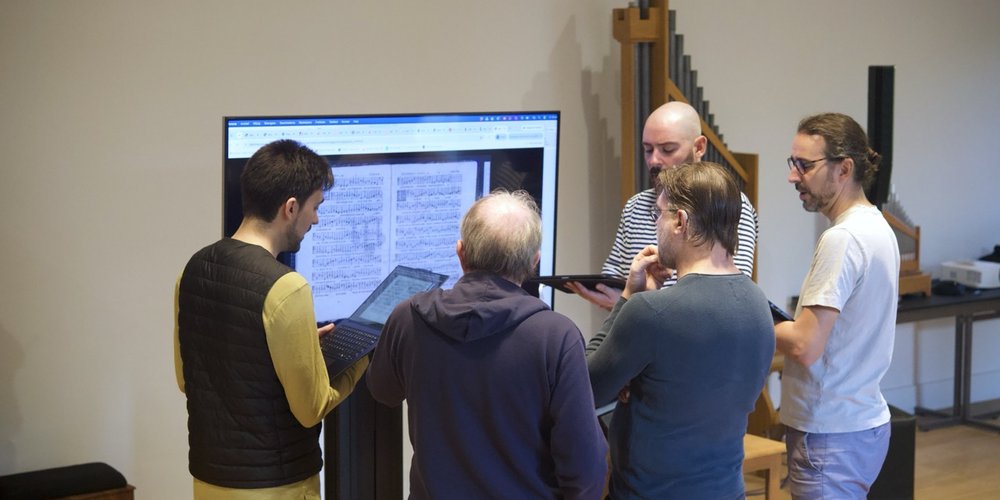
ParkCollegium, the Alamire Foundation’s ensemble-in-residence, meets several times a year for thematic lab sessions at the House of Polyphony.
From 14 to 16 October, the ensemble delved into the fascinating world of language in the fifteenth and sixteenth centuries. The singers explored how a composer’s vernacular or that of a particular region influenced the diction of Latin texts in sacred compositions. They also considered how a particular choir, perhaps far from the region in which a work originated, might have sung with their local ‘accent’. Italian pronunciation of Latin in the Catholic Church was only established as the standard in the early twentieth century. Before that, texts were generally pronounced with the accent of the region in question.
Through music by Mouton, Palestrina, De la Rue, Weerbeke and Willaert, the ‘Collegians’ explored different accents according to the composers’ region of birth or the region in which they were active. A comparison of the Credo from Mouton’s Missa Sancta Trinitas, sung with French pronunciation (Mouton worked at the French court for almost his entire career), Brabantine pronunciation (the Mass was also copied into one of the Bossche Choirbooks) and Italian pronunciation (the ecclesiastical standard), yielded remarkable results. These different approaches also make it possible to gain a better understanding of the historical performance practice of Franco-Flemish polyphony.