
Madrigals in the Sixteenth Century
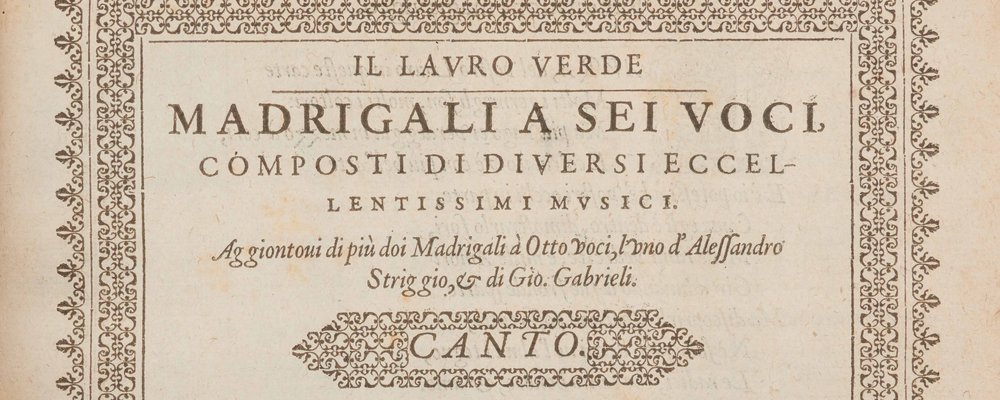
Brussels, Royal Library of Belgium, II 38.949 A / Alamire Digital Lab
Madrigal books encompass a wide range of cultural and social practices. Madrigalists drew on poetry by leading authors to craft their own narratives, used music as a means to interpret and critique these texts, and dedicated their prints to powerful patrons in order to cultivate beneficial relationships. Recent trends in musicology show a shift in scholarly focus toward topics that were previously understudied, such as improvisational techniques, the relationship between oral and written musical traditions, performance-oriented research, and analyses of the connections between musical style and its material context.
From this multidisciplinary perspective, the present research project examines the first book of the Calabrian composer Giandomenico Martoretta. Although this polyphonist has been little studied, he was regarded during his lifetime as one of the most prominent composers of his era. His madrigals appear in major collections, and he is mentioned—alongside Cypriano de Rore and Adriaan Willaert—in Doni’s Libraria.
The four parts of this study form a coherent whole, addressing the key aspects of the book’s conception, production, and use. Each aspect is situated within the broader social, linguistic, and musical context of sixteenth-century Italy. Such an approach aims to provide a comprehensive view of the complex and multifaceted phenomenon of the madrigal, undoubtedly one of the most original forms of expression of Renaissance culture.